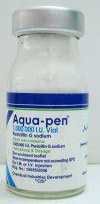
aqua-pen 1 m.i.u. vial
اكوابن 1 مليون 1فيال
penicillin gThe published official price. Pharmacies may differ slightly.
- Form
- vial
- Manufacturer
- misr > cid
- Route
- injection
The medical information below is guidance and may be incomplete or wrong. Do not change your medicine or dose based on it — ask a pharmacist or doctor.
Uses
Indicated for the treatment of serious infections caused by susceptible gram-positive bacteria and spirochetes, including streptococcal infections, pneumococcal pneumonia, meningitis, endocarditis, syphilis, anthrax, and other infections where penicillin G remains the drug of choice. Culture and sensitivity testing should guide therapy.
Do not use if
Contraindicated in patients with a history of hypersensitivity (anaphylactic) reactions to any penicillin. Cross-reactivity with cephalosporins should be considered.
Side effects
Common adverse effects include hypersensitivity reactions (rash, urticaria, anaphylaxis), electrolyte disturbances (with potassium salt at high doses), and neurotoxicity (seizures) at very high doses. The Jarisch-Herxheimer reaction may occur in spirochetal infections.
Warnings
Serious and fatal hypersensitivity reactions, including anaphylaxis, have been reported. Obtain a careful history of allergy before use. Use with caution in patients with renal impairment due to risk of neurotoxicity and electrolyte disturbances. High-dose IV penicillin G potassium may cause hyperkalemia.
How it works
Penicillin G is a bactericidal beta-lactam antibiotic that inhibits bacterial cell wall synthesis by binding to penicillin-binding proteins (PBPs), leading to cell lysis. It is active primarily against gram-positive organisms. Following intravenous infusion, peak serum concentrations are achieved immediately upon completion; it is renally eliminated with a short half-life.
Storage
Store dry powder at room temperature (20–25°C). Reconstituted solutions should be stored in a refrigerator (2–8°C) and used within the period specified by the manufacturer.