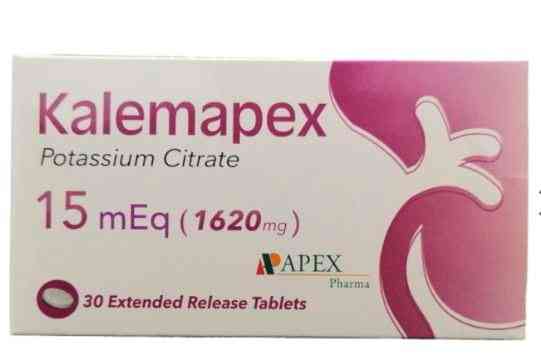
kalemapex 15 meq (1620 mg) 30 xr tabs
كاليمابكس 15ملي مكافيء ( 1620مجم ) 30 قرص
potassium citrateThe published official price. Pharmacies may differ slightly.
- Strength
- 15 meq + 1620 mg
- Form
- tablet
- Manufacturer
- multi-apex
- Route
- oral.solid
The medical information below is guidance and may be incomplete or wrong. Do not change your medicine or dose based on it — ask a pharmacist or doctor.
Uses
Indicated for the management of renal tubular acidosis with calcium stones, hypocitraturic calcium oxalate nephrolithiasis of any etiology, and uric acid lithiasis with or without calcium stones. It alkalinizes the urine and raises urinary citrate levels.
Do not use if
Contraindicated in patients with hyperkalemia or conditions predisposing to hyperkalemia, including chronic renal failure, uncontrolled diabetes mellitus, acute dehydration, and in patients receiving potassium-sparing diuretics or potassium supplements. Also contraindicated in peptic ulcer disease.
Side effects
Common side effects include gastrointestinal complaints such as abdominal discomfort, nausea, vomiting, diarrhea, and loose stools. Serious risk of hyperkalemia exists in susceptible patients, which can cause cardiac arrest.
Warnings
Risk of potentially fatal hyperkalemia in patients with impaired potassium excretion; monitor serum electrolytes and ECG in high-risk patients. Solid forms may cause gastrointestinal obstruction or ulceration; take with plenty of water. Regular monitoring of renal function and serum potassium is mandatory.
How it works
Oral potassium citrate is metabolized to potassium bicarbonate, inducing an alkaline load that increases urinary pH and raises urinary citrate excretion. Increased citrate in urine inhibits calcium salt crystallization (oxalate, phosphate) and reduces uric acid precipitation, thereby preventing stone formation.
Storage
Store at controlled room temperature, 15°C–30°C (59°F–86°F). Keep in tightly closed containers away from moisture.