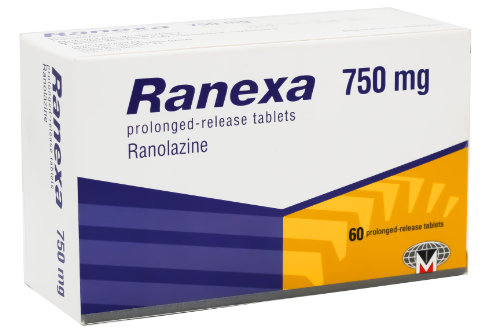
ranexa 750 mg 60 prolonged r.tabs
رانيكسا 750مجم 60 قرص ممتد المفعول
ranolazineThe published official price. Pharmacies may differ slightly.
- Strength
- 750mg
- Form
- tablet
- Manufacturer
- menarini > medsites
- Route
- oral.solid
The medical information below is guidance and may be incomplete or wrong. Do not change your medicine or dose based on it — ask a pharmacist or doctor.
Uses
Indicated for the treatment of chronic angina in adults. May be used in combination with beta-blockers, nitrates, calcium channel blockers, antiplatelet agents, lipid-lowering therapy, ACE inhibitors, or angiotensin receptor blockers.
Do not use if
Contraindicated in patients taking strong CYP3A inhibitors (e.g., ketoconazole, clarithromycin, nelfinavir), CYP3A inducers (e.g., rifampin, phenobarbital), and in patients with liver cirrhosis due to significantly increased plasma levels.
Side effects
The most common adverse reactions include dizziness, headache, constipation, and nausea. QT interval prolongation can occur. Less common effects include peripheral edema, hypotension, and dry mouth.
Warnings
Ranolazine prolongs the QT interval and should be used with caution in patients with a history of congenital long QT syndrome or on other QT-prolonging medications. Avoid in hepatic impairment. Monitor renal function as ranolazine is partially cleared renally.
How it works
Ranolazine's precise mechanism of antianginal action has not been fully elucidated. At therapeutic concentrations, it inhibits the late phase of the cardiac sodium current (late INa), reducing intracellular sodium accumulation and thereby decreasing calcium-mediated myocardial ischemia without affecting heart rate or blood pressure significantly.
Storage
Store at controlled room temperature, 15°C–30°C (59°F–86°F). Keep in original container. Extended-release tablets should not be crushed, split, or chewed.