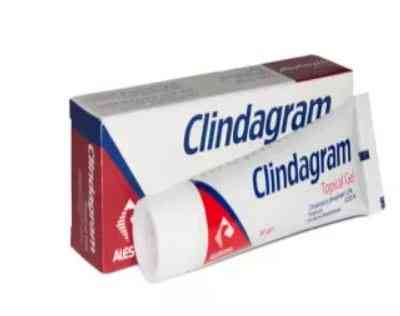
clindagram topical gel 30 gm
كلينداجرام جل 30 جرام
clindamycin+tretinoinThe published official price. Pharmacies may differ slightly.
- Form
- gel
- Manufacturer
- al esraa pharmaceutical optima
- Route
- topical
The medical information below is guidance and may be incomplete or wrong. Do not change your medicine or dose based on it — ask a pharmacist or doctor.
Uses
Indicated for the topical treatment of acne vulgaris in patients 12 years of age and older. Clindamycin is a lincosamide antibiotic that reduces Cutibacterium acnes colonization, while tretinoin is a retinoid that normalizes follicular keratinization and decreases microcomedo formation.
Do not use if
Contraindicated in patients with a history of regional enteritis, ulcerative colitis, or antibiotic-associated colitis. Avoid in patients with hypersensitivity to clindamycin, lincomycin, tretinoin, or any excipient in the formulation.
Side effects
Local skin reactions including erythema, scaling, itching, burning, and stinging are the most common. Systemic effects may include nasopharyngitis, pharyngolaryngeal pain, dry skin, cough, and sinusitis. Severe colitis, including pseudomembranous colitis, has been reported with clindamycin use.
Warnings
Clindamycin can cause severe colitis which may be fatal; discontinue use if significant diarrhea or bloody stools develop. Avoid contact with eyes, lips, and mucous membranes. Tretinoin increases photosensitivity; use sun protection during treatment. Not recommended during pregnancy due to retinoid risk.
How it works
Clindamycin inhibits bacterial protein synthesis by binding to the 50S ribosomal subunit, reducing Cutibacterium acnes proliferation. Tretinoin binds to retinoic acid receptors, decreasing cohesiveness of follicular epithelial cells, stimulating follicular epithelial turnover, and reducing microcomedo formation.
Storage
Store at 25°C (77°F); excursions permitted to 15–30°C (59–86°F). Protect from light and freezing. Keep out of reach of children.