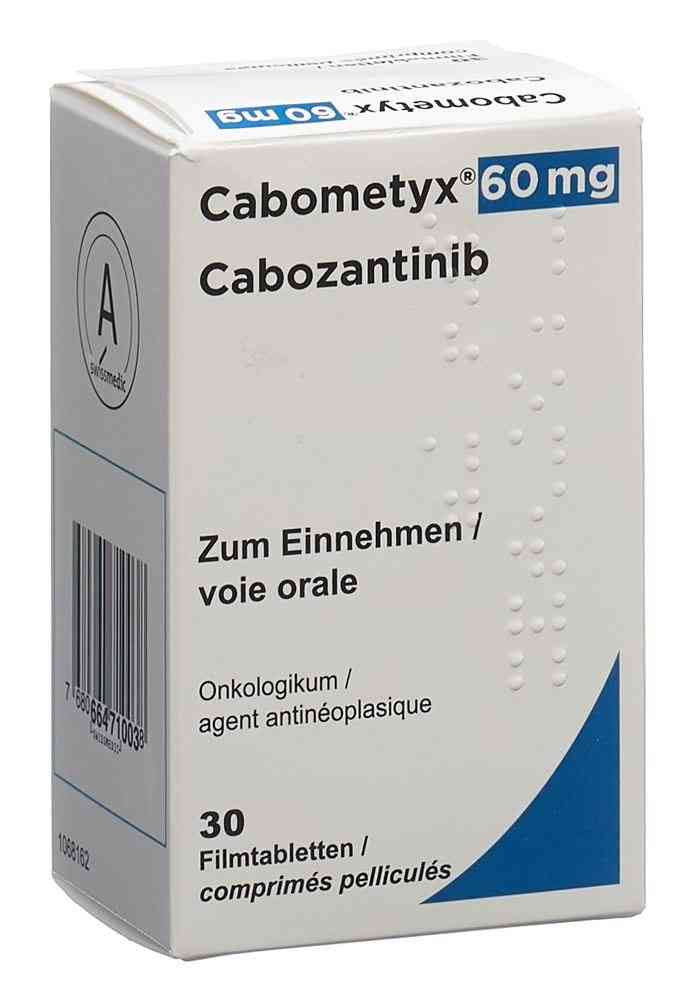
cabometyx 60 mg 30 tabs
كابوميتكس 60 مجم 30 قرص
cabozantinibThe published official price. Pharmacies may differ slightly.
- Strength
- 60 mg
- Form
- tablet
- Manufacturer
- takeda
- Route
- oral.solid
The medical information below is guidance and may be incomplete or wrong. Do not change your medicine or dose based on it — ask a pharmacist or doctor.
Uses
Indicated for: (1) advanced renal cell carcinoma (RCC), including as first-line therapy in combination with nivolumab; (2) hepatocellular carcinoma (HCC) previously treated with sorafenib; (3) locally advanced or metastatic differentiated thyroid cancer (DTC) progressing after prior VEGFR-targeted therapy in patients radioactive iodine-refractory or ineligible (adults and pediatric patients ≥12 years).
Do not use if
No absolute contraindications listed in the FDA label. However, cabozantinib should not be administered to patients with a recent history of severe hemorrhage.
Side effects
Common adverse effects include diarrhea, fatigue, decreased appetite, nausea, palmar-plantar erythrodysesthesia, hypertension, and weight loss. Serious risks include hemorrhage, gastrointestinal perforations and fistulas, thromboembolic events, hypertensive crisis, cardiac failure, hepatotoxicity, and wound healing complications.
Warnings
Do not administer if there is a recent history of clinically significant hemorrhage. Monitor for gastrointestinal perforations, fistulas, thromboembolic events, hypertension, hepatotoxicity, osteonecrosis of the jaw, and wound healing complications. Advise patients of reproductive potential to use effective contraception during and after treatment.
How it works
Cabozantinib is a small-molecule tyrosine kinase inhibitor that targets multiple receptors including MET, VEGFR-1/2/3, AXL, RET, ROS1, TYRO3, MER, KIT, TRKB, FLT-3, and TIE-2. Inhibition of these pathways interferes with tumor growth, angiogenesis, and metastasis.
Storage
Store at controlled room temperature. Keep in original container. See manufacturer labeling for specific storage conditions for each tablet strength.