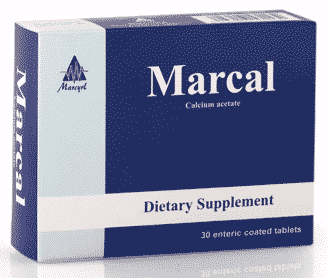
marcal 30 tablets
ماركال 30 قرص
calcium acetateThe published official price. Pharmacies may differ slightly.
- Form
- tablet
- Manufacturer
- marcyrl
- Route
- oral.solid
The medical information below is guidance and may be incomplete or wrong. Do not change your medicine or dose based on it — ask a pharmacist or doctor.
Uses
Calcium acetate is a phosphate binder indicated for the reduction of elevated serum phosphorus in patients with end-stage renal disease (ESRD). It is taken with meals to bind dietary phosphate in the gut.
Do not use if
Contraindicated in patients with hypercalcemia. Use with caution in patients on digitalis glycosides due to risk of worsening digitalis toxicity.
Side effects
The most common adverse effects (>10%) are hypercalcemia, nausea, and vomiting. Hypercalcemia may aggravate digitalis toxicity. Pruritus and abdominal discomfort are also reported.
Warnings
Monitor serum calcium levels regularly; reduce or discontinue if hypercalcemia occurs. Severe hypercalcemia may require hemodialysis. Hypercalcemia may enhance the toxic effects of digitalis.
How it works
When taken with meals, calcium acetate combines with dietary phosphate in the gastrointestinal tract to form insoluble calcium phosphate, which is excreted in feces. This reduces phosphate absorption and lowers serum phosphate in ESRD patients.
Storage
Store at room temperature 20°C to 25°C (68°F to 77°F). Keep container tightly closed.